Farooqabad, Sheikhupura, Pakistan

Mon - Sat 9:00 am - 5:00 pm    |    Fri 09:00 am - 01:00 pm    |    Sunday CLOSED

Voice of Special Person

Just another Zakra Demos site

Home

Welcome to Voice of Special Person

A Global Community for Empowerment, Inclusion, and Growth.

Muhammad Ishtiaq Ahmad

Hello, I’m Muhammad Ishtiaq Ahmad, the founder of Voice of Special Person. As a disabled individual, I have experienced firsthand the challenges and opportunities that come with living in a world not always designed for us. This platform is my vision—a space where disabled people from around the world can come together to share their experiences, support one another, and work toward a brighter future.

About Us

Empowering Voices, Enabling Lives

We connect disabled individuals worldwide, fostering a community of support, learning, and empowerment.

Through vocational training and mentorship, we equip individuals with the skills needed for success.

Our mission is to break barriers, create opportunities, and ensure every voice is heard and valued.

Years of Dedication

Global Community

Recognized Impact

Transforming Lives

Our Missions

Building a Future of Inclusion & Opportunity

At Voice of Special Person, we are building a global movement to improve the lives of disabled individuals through:

Education & Skill Development

Access resources, workshops, and tools for personal and professional growth.

Vocational Training

Gain practical skills through mentorship programs from developed nations.

Employment Opportunities

Find job listings, career guidance, and success stories.

Business & Entrepreneurship

Get support to start and grow your own business through import-export programs.

Improved Living Standards

Learn and share innovative solutions for accessible daily life.

Advocacy & Awareness

Join our movement for disability rights and equal opportunities worldwide.

our SERVICES

Our Programs: Empowering Lives, Creating Opportunities

At Voice of Special Person, we are building a global community dedicated to improving the lives of disabled individuals through education, employment, and enhanced living styles. By connecting people across borders, we aim to bridge the gap between developed and developing nations, ensuring that everyone has access to the tools and support they need to thrive.

What We Offer

🌍 Global Connection – Join a worldwide network of disabled individuals, caregivers, and allies.

📚 Education & Skill Development – Access resources, workshops, and tools for personal and professional growth.

💼 Employment Opportunities – Find job listings, career advice, and success stories.

🏡 Improved Living Styles – Share and learn practical tips for making life more accessible and fulfilling.

📢 Advocacy & Awareness – Be part of a movement promoting disability rights, inclusion, and equal opportunities.

🎓 Vocational Training – Learn skills from experts in developed countries to achieve financial independence.

🚀 Business Opportunities – Explore import and export business connections to create sustainable livelihoods.

Contact Us

Get In Touch​

Have Questions? Want to Join Us? Let’s Connect!

📩 Email: infovoiceofspecialperson@gmail.com

Hard work never ruins your chance

Hard Work and Success

Success comes from perseverance and effort. While talent and luck play a role, consistent dedication is the key to overcoming challenges. Instead of waiting for ideal situations, focus on making the best of your resources. Success is about creating opportunities through relentless effort and adaptability.

Testimonials​

What Our Members Say


At Voice of Special Person, we empower disabled individuals worldwide. Hear from those whose lives have been transformed through our programs:

“Through vocational training, I’ve gained the skills to start my own business. Now, I’m financially independent and supporting my family!”

Aisha, Pakistan

“This platform connected me with global mentors who helped me find employment despite my disability.”

Ahmed, Pakistan

your questions answered

Frequently Asked Questions

Here are some common questions about Voice of Special Person and how we help empower disabled individuals worldwide.

Voice of Special Person is a global platform dedicated to empowering disabled individuals through education, employment, and business opportunities.

We connect disabled individuals with experts from developed countries who provide specialized skill training, enabling financial independence.

We facilitate import-export businesses, connecting disabled entrepreneurs to global markets.


You can sign up on our website and connect with our global network of mentors, trainers, and business opportunities.

You can volunteer, share your story, mentor someone, or contribute to our mission in various ways.

Need Immediate Support?


Looking for resources, training, or business opportunities? Voice of Special Person is here to help. Join our global community today and take the first step toward empowerment and independence.

A group of diverse people, including those with disabilities, shaking hands and collaborating in front of a globe, representing international cooperation.

International Cooperation: Turning the Dreams of the Jakarta Declaration into Reality

Role of International Organizations:
The United Nations and its related agencies, such as the Economic and Social Commission for Asia and the Pacific (ESCAP), play a crucial role in protecting and promoting the rights of persons with disabilities. They assist countries in developing policies and laws for persons with disabilities and create international standards and guidelines to cater to their diverse needs. In this way, these organizations contribute significantly to the advancement of the rights of persons with disabilities and improving their lives.

Importance of Regional Cooperation:
Alongside international cooperation, regional cooperation also plays an important role in the betterment of persons with disabilities. For example, the countries of Southeast Asia have declared their shared aspirations through the “ASEAN Declaration on the Rights of Persons with Disabilities.” Under this, these countries have agreed to develop joint policies and programs for persons with disabilities. Such regional initiatives can help better address the specific needs of persons with disabilities in the region.

Sharing of Financial Resources and Technology:
International cooperation also involves the sharing of financial resources and technology. Different countries and organizations can work together on developmental projects and programs for persons with disabilities. This not only ensures better utilization of financial resources but also allows for the sharing of assistive technologies and tools that can benefit persons with disabilities. These efforts can bring positive changes in the lives of persons with disabilities.

Significance of Agreements and Treaties:
Agreements and treaties also play an important role in international cooperation. For example, the “Convention on the Rights of Persons with Disabilities” (CRPD) is a treaty that provides a detailed description of the rights of persons with disabilities. Such treaties guide countries in upholding the rights of persons with disabilities and implementing appropriate measures to ensure their inclusion and empowerment.

Conclusion:
International cooperation is crucial in turning the dreams of the Jakarta Declaration into reality. By working together, countries and international organizations can address the challenges faced by persons with disabilities, share resources and best practices, and create a more inclusive and accessible world for all. Through coordinated efforts, the rights and well-being of persons with disabilities can be truly realized, paving the way for a more equitable and just global community.

A person in a wheelchair using a laptop, surrounded by icons representing social protection, employment, education, and healthcare.

Poverty Reduction and Social Protection for Persons with Disabilities

The Jakarta Declaration and Social Protection:
The Jakarta Declaration (2018) calls upon governments to introduce special financial assistance, scholarships, and insurance programs for persons with disabilities. These measures can help lift persons with disabilities out of the poverty trap. For instance, in India, the “Divyangjan” program provides monthly cash transfers to persons with disabilities, while the “Aadhaar” card grants them access to government benefits and subsidies. Similarly, in Brazil, the “Bolsa Familia” program provides cash transfers to poor families, with additional provisions for persons with disabilities.

Employment Opportunities for Persons with Disabilities:
In addition to social protection schemes, employment opportunities for persons with disabilities also contribute to poverty reduction. For example, in South Africa, the “Qualification Quota” requires businesses to employ at least 2% of persons with disabilities in their total workforce. This not only provides jobs for persons with disabilities but also enhances their economic independence and self-confidence. Similarly, in Bangladesh, the “Disability Development Foundation” provides self-employment opportunities to persons with disabilities, such as access to loans and training to start small businesses.

Education and Healthcare for Persons with Disabilities:
The education and healthcare of persons with disabilities also play a crucial role in poverty alleviation. For instance, in Brazil, the “Universal Health Care System” provides free and quality healthcare services to persons with disabilities. Similarly, in India, “Government Schools” offer special classes and facilities for children with disabilities, improving their education and skills. These initiatives help persons with disabilities to break the cycle of poverty and enhance their economic and social status.

Conclusion:
The eradication of poverty and the provision of social protection for persons with disabilities are closely interlinked. Through a comprehensive approach that includes financial assistance, employment opportunities, and access to education and healthcare, governments can empower persons with disabilities to overcome the barriers of poverty and achieve greater economic and social inclusion. By implementing the recommendations of the Jakarta Declaration, nations can work towards a more equitable and inclusive society where persons with disabilities can thrive and contribute to the overall development of their communities.

A high-tech, inclusive setting where individuals with disabilities are using advanced assistive technology, including a woman with a robotic prosthetic arm using a tablet and a man in a wheelchair using a voice-controlled smart speaker.

Technology and Assistive Devices: Empowering Lives Through Innovation”

In the rapidly evolving world of the 21st century, technology has become an integral part of our daily lives, transforming the way we work, communicate, and interact with our environment. This technological revolution has had a profound impact on individuals with disabilities, providing them with a wealth of assistive devices and solutions that empower them to overcome barriers and live more independent, fulfilling lives.

Enhancing Physical Capabilities

Assistive technologies, ranging from specialized software and hardware to wearable devices and smart home systems, have revolutionized the way people with disabilities navigate their world. For individuals with physical impairments, advanced prosthetics, exoskeletons, and mobility aids have restored their ability to ambulate, perform everyday tasks, and engage in activities they once thought impossible. These cutting-edge devices not only enhance physical capabilities but also foster greater independence and social integration.

One remarkable example is the development of robotic exoskeletons, which use advanced sensors and actuators to assist individuals with limited mobility in standing, walking, and performing daily activities. These wearable systems, which can be customized to the user’s specific needs, have enabled many individuals with spinal cord injuries, stroke, or other neuromuscular conditions to regain their mobility and participate in activities they once thought were out of reach.

Empowering Sensory Abilities

Individuals with sensory disabilities, such as visual or hearing impairments, have also benefited tremendously from innovative assistive technologies. Screen readers, text-to-speech software, and braille displays have dramatically improved access to information and communication for those with visual impairments, while cochlear implants and advanced hearing aids have transformed the lives of individuals with hearing loss.

These assistive devices not only enhance sensory abilities but also foster greater independence and social engagement. For example, smart glasses equipped with object recognition and navigation capabilities can help individuals with visual impairments navigate their surroundings with greater confidence and autonomy. Similarly, voice-controlled assistants and intelligent personal devices have become indispensable tools for individuals with limited mobility or dexterity, empowering them to control their environment, access information, and communicate with ease.

Cognitive and Developmental Support

Beyond physical and sensory aids, the rise of digital technologies has also had a profound impact on cognitive and developmental disabilities. Assistive apps and software, designed to enhance memory, attention, and problem-solving skills, have proven invaluable in supporting individuals with conditions like autism, ADHD, and dementia.

These tools not only help users navigate daily challenges but also foster greater independence, social integration, and overall quality of life. For instance, task-management apps can provide step-by-step guidance for individuals with cognitive impairments, helping them to complete everyday activities with greater confidence and autonomy. Similarly, social skills training programs leveraging virtual reality and gamification have been shown to improve communication and social interaction for individuals on the autism spectrum.

The Integration of AI and Machine Learning

The integration of artificial intelligence (AI) and machine learning (ML) has further expanded the capabilities of assistive devices, enabling them to adapt to the unique needs and preferences of each user. Smart home systems, for instance, can now automatically adjust lighting, temperature, and other environmental factors to create a more comfortable and accessible living space. Similarly, voice-controlled assistants and intelligent personal devices have become indispensable tools for individuals with limited mobility or dexterity, empowering them to control their surroundings, access information, and communicate with ease.

These AI-powered assistive technologies not only enhance physical and cognitive abilities but also foster greater social inclusion and emotional well-being. By anticipating user needs and preferences, they can help to reduce stress, anxiety, and feelings of isolation, ultimately improving the overall quality of life for individuals with disabilities.

Toward a More Inclusive Future

As technology continues to evolve, the potential for assistive devices to transform the lives of individuals with disabilities is limitless. Researchers and innovators are constantly pushing the boundaries of what is possible, developing cutting-edge solutions that not only enhance physical and cognitive abilities but also foster greater social inclusion and emotional well-being.

Through the power of technology and assistive devices, individuals with disabilities are no longer confined by their limitations but are empowered to pursue their dreams, explore new horizons, and fully participate in the world around them. As we move forward, the continued advancement of these life-changing technologies will undoubtedly play a crucial role in creating a more inclusive and equitable society, where everyone has the opportunity to thrive and reach their full potential.

Conclusion

The transformative power of assistive technology has the potential to revolutionize the lives of individuals with disabilities, empowering them to overcome barriers, enhance their capabilities, and fully participate in the world around them. From advanced prosthetics and mobility aids to cognitive support tools and AI-powered smart home systems, the rapid evolution of these technologies is paving the way for a more inclusive and accessible future. As we continue to push the boundaries of innovation, the positive impact of assistive devices on the lives of individuals with disabilities will only continue to grow, ultimately creating a more equitable and just society for all.

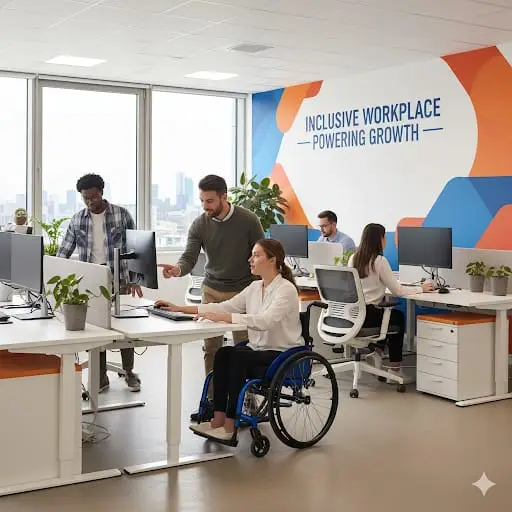
An inclusive office environment featuring a woman in a wheelchair working at a desk with colleagues.

Economic Empowerment – Engagement of the Private Sector

Why is the involvement of the private sector crucial? The government alone cannot provide employment to all persons with disabilities. Collaboration from large corporations, banks, and factories is indispensable. The Jakarta Declaration encourages companies to create inclusive work environments that allow individuals with disabilities to showcase their skills and talents.

Key Objectives:

  1. Equal Opportunity: Businesses must be mandated to ensure that hiring processes do not discriminate based on disability, promoting fairness and inclusivity.
  2. Reasonable Accommodation: Workplaces should make necessary adaptations—such as accessible software, ergonomic furniture, or flexible working hours—to enable employees with disabilities to perform effectively and comfortably.

Business Benefits: Employees with disabilities bring unique perspectives, innovative ideas, and dedicated efforts, which can lead to enhanced creativity and competitive advantage for companies.

Conclusion:

Economic self-reliance is the pathway through which individuals with disabilities become confident, active, and valued members of society. When the private sector actively participates, “disability” transforms into “ability,” unlocking immense potential and fostering societal inclusion.

Digital illustration showing a modern city with a sign advocating for equality and inclusion.

A World Without Barriers – Ensuring Universal Accessibility

Introduction:
The third pillar of the Jakarta Declaration is “Accessibility.” Its primary goal is to foster an environment where disabilities do not hinder anyone’s ability to move freely or access information. When we talk about accessibility, it extends beyond simply installing ramps instead of stairs—it encompasses equitable access to the digital world as well.
Key Principles of Accessibility:

Physical Accessibility:
Design all public and private buildings, parks, and transportation systems according to “Universal Design” principles. This ensures that individuals using wheelchairs or those with visual impairments can travel independently and comfortably without needing assistance.

Digital Accessibility:
Make websites, mobile applications, and online educational resources compatible with screen readers and other assistive technologies so everyone can participate fully in the digital space.

Access to Information:
Provide essential information in sign language and Braille formats to ensure that deaf and visually impaired individuals stay informed and connected.

Conclusion:
Accessibility is not a matter of privilege; it is a fundamental human right. According to the Jakarta Declaration, our shared goal is to eliminate barriers across the Asia-Pacific region by 2032, creating an inclusive environment where everyone has equal opportunities to thrive.

A diverse and inclusive environment showing a modern building with a wheelchair ramp, tactile paving for the visually impaired, and a person using a mobile app with accessibility features, representing the Jakarta Declaration's goal for a barrier-free world.

“Nothing About Us Without Us” – Ensuring Inclusive Decision-Making for People with Disabilities

Argument 5: Empowering the Next Generation

Scroll to top